


Last Updated: November 21, 2026
Quick Summary
To shop for clothes online with confidence, measure yourself in centimetres first, then compare those numbers against the garment measurements on each product page rather than your usual size. Read the fabric composition, fit notes and return policy before you check out, so the total cost and fit are clear.
- Measure your bust, waist, hips and inside leg in centimetres, snug but not tight.
- Compare your measurements to the garment dimensions, not just the size label.
- Read fit notes such as true to size or size up for a relaxed fit.
- Check the return window, condition rules and who pays return postage.
- Try pieces on indoors with the tags still attached to test the fit.
Table of Contents
- Why Buying Clothes Online Feels Harder Than It Should
- How to Measure Yourself for Online Clothes Shopping
- Reading an Online Clothing Size Guide Properly
- How to Choose Clothes Online When You Can't Try Them On
- Judging Fabric and Quality Before You Buy
- Understanding Returns, Exchanges and Total Cost
- How to Style Clothes With Shoes Once They Arrive
- Booking Your First Order and Building Your Own Fit Check
- Frequently Asked Questions
Why Buying Clothes Online Feels Harder Than It Should
Shopping for clothes online is hard for one simple reason: you can't touch the fabric, check the seams or try the piece on before you shop for clothes online with a credit card in hand. Researchers at the University of Arkansas' Sam M. Walton College of Business found that products with sensory attributes, such as tops and bottoms, are more likely to be bestsellers offline (Finding the Right Fit: How Customers Choose Whether to Shop Online or In-Store). That is exactly why clothing feels riskier online than a phone case or a book.
First-time nerves are normal. This guide walks you through how to shop for clothes online with confidence, from measuring yourself to checking fabric, understanding returns and styling your pieces once they arrive.
How to Measure Yourself for Online Clothes Shopping
Before you browse a single product page, take your own measurements. Most online sizing problems come from guessing rather than measuring.
Grab a soft measuring tape and a friend if you can. Measure your bust, waist, hips and inside leg, and write them down in centimetres. Keep the tape snug but not tight, and stand relaxed in a fitted layer.
A common mistake is measuring over bulky clothing, which inflates the numbers and sends you to the wrong size. Once you have your figures, keep them in your phone so you can compare them against every brand you shop.
Reading an Online Clothing Size Guide Properly
Every brand sizes differently, so never assume a 10 at one label matches a 10 at another. The size guide is the most useful tool on any product page, yet many shoppers skip straight past it. Labels can drift because each brand builds its own fit model, so the same number can mean different things across garments.
Here is a workflow that works across most retailers:
- Know which numbers the chart is asking for. Size charts usually list body measurements (what you measure on yourself) or garment measurements (the actual dimensions of the piece laid flat). Mixing the two up is the quickest route to a return. If the chart says "bust 96 cm," check whether that is your bust or the garment's finished bust.
- Compare your measurements to the chart, not your usual size. Your usual size is a habit; your measurements are data. If you fall between two sizes, move to step three.
- Use the garment measurements on the product page. These show the actual dimensions of the piece, chest, waist, hip, length, so you can compare them against a garment you already own and love. Lay your best-fitting piece flat, measure it the same way, and match the numbers.
- Read the fit notes alongside the chart. Notes such as "true to size," "size up for a relaxed fit" or "model is 175 cm wearing a size 8" tell you how the brand intends the piece to sit on a real body.
- Check the size scale used. Sizing can differ between scales, so use the brand's own conversion chart rather than converting in your head.
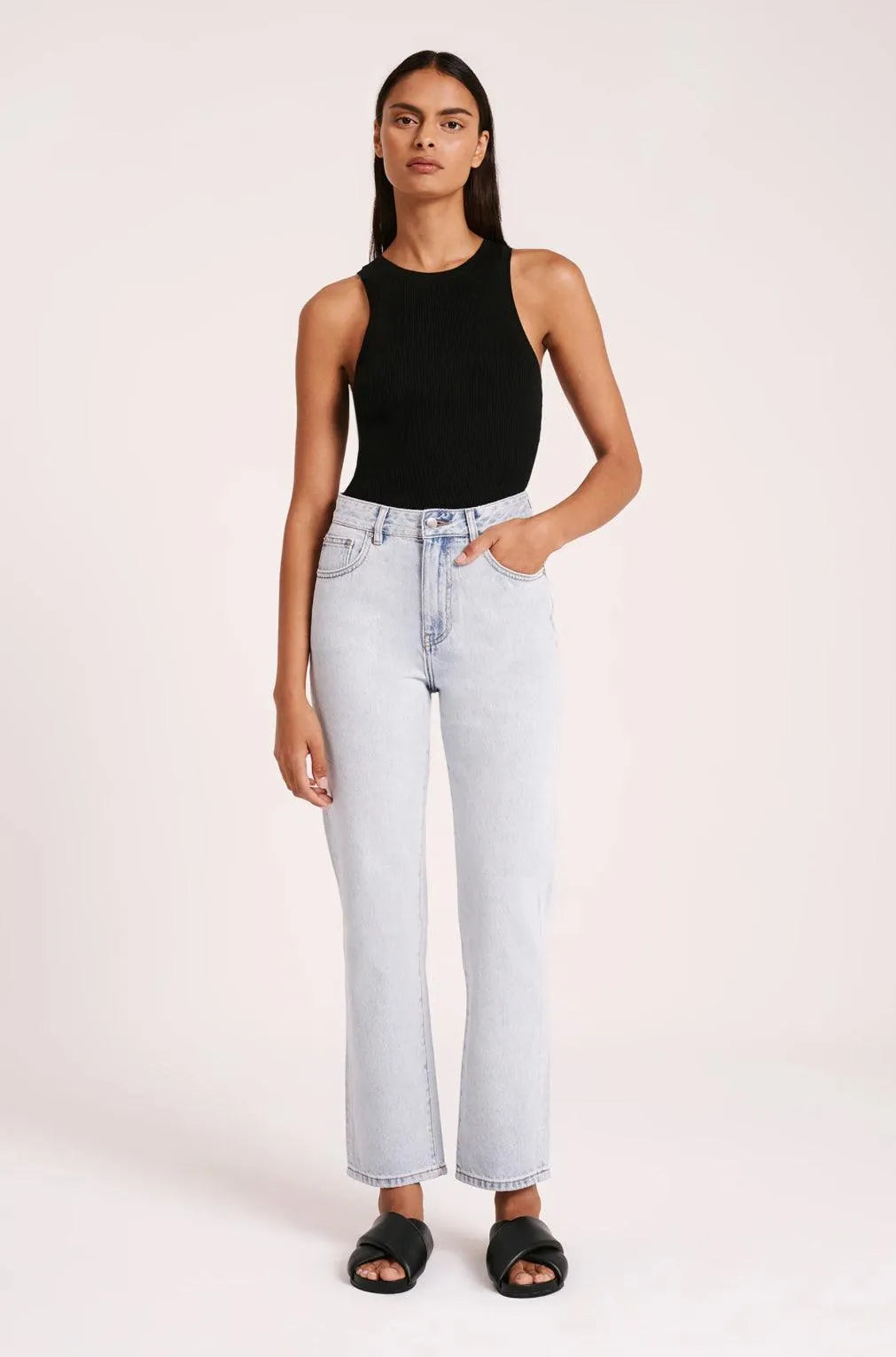
For our Nude Lucy Organic Straight Leg Jean in Clear Blue, the listing notes that it fits true to size and suggests sizing up for a more relaxed fit. The jean is made from 12 oz 100% organic cotton denim with a high rise and fitted waist, so you know exactly what kind of shape to expect (Nude Lucy Organic Straight Leg Jean in Clear Blue | thetartanfox.com).
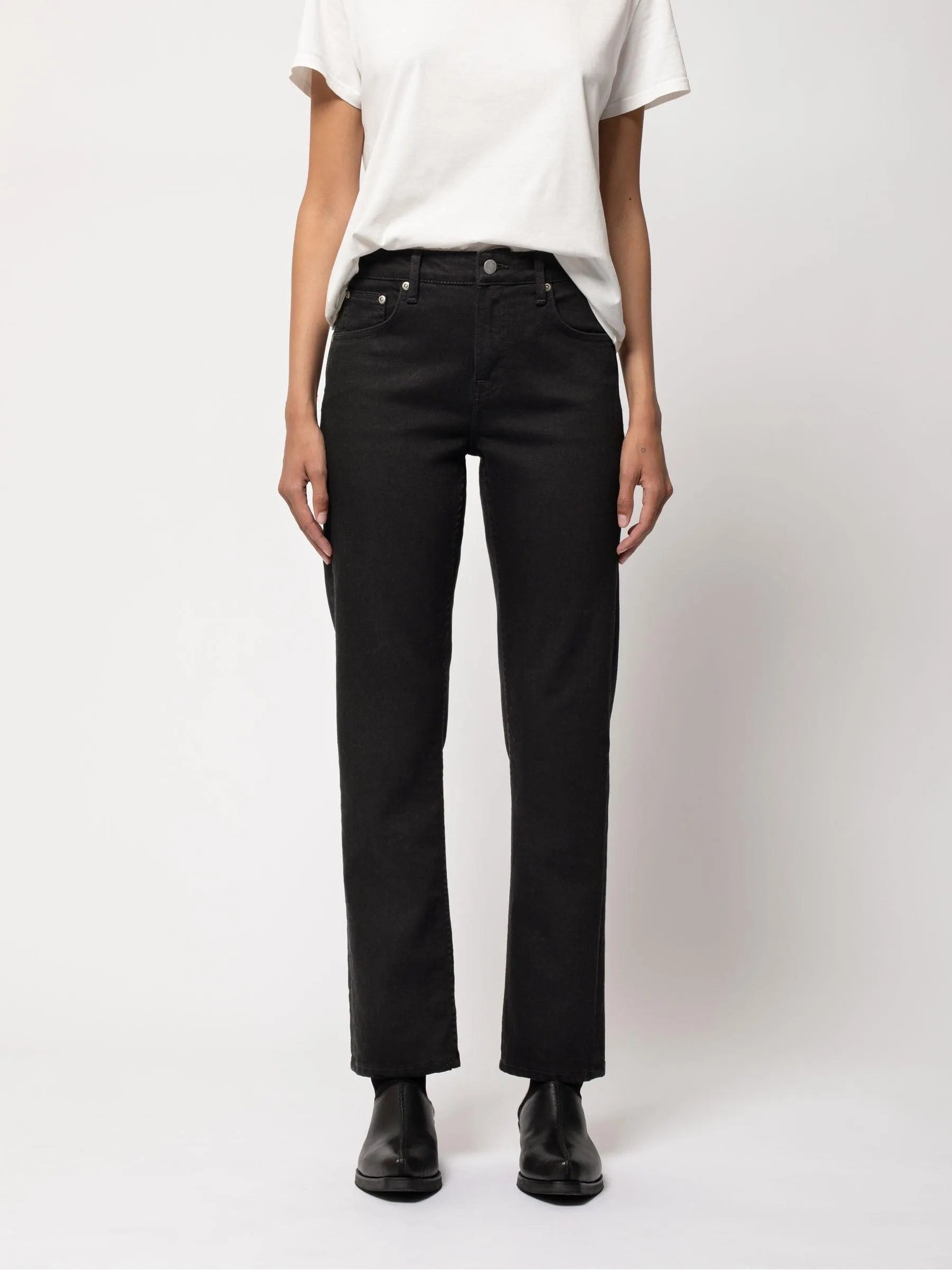
Similarly, the Nudie Jeans Straight Sally in Everblack is made in 99% cotton and 1% elastane with a mid-waist straight leg, and the listing gives the model's measurements so you can compare directly (Nudie Jeans Straight Sally in Everblack | thetartanfox.com).
Pay attention to the fabric composition and the fit notes together. A stretch denim with a fitted cut will move differently from a rigid denim with a relaxed cut, even at the same size. That is why the chart alone is never enough, it is the chart plus the garment measurements plus the fit note that gives you a reliable read.
Watch out: a size chart that lists only body measurements with no garment dimensions leaves you guessing on cut. When that happens, size to the larger measurement and plan to use the returns process rather than ordering two sizes and hoping.
How to Choose Clothes Online When You Can't Try Them On
Choosing well online comes down to knowing your own style and reading the signals each product gives you. Start with pieces you already wear and love, then look for items that share their cut, length and fabric weight.
Build a short list of three to five pieces you're confident in. Then add new items one at a time, so each purchase has a clear job in your wardrobe.
Reading Product Descriptions and Fit Notes
Product descriptions carry the most useful information on the page. Look for the model's height and the size she is wearing, because that tells you how the garment sits on a real body. Fit notes such as "true to size" or "size up for a relaxed fit" are worth taking seriously.
For our Nude Lucy Organic Straight Leg Jean in Clear Blue, the listing notes that it fits true to size and suggests sizing up for a more relaxed fit. The jean is made from 12 oz 100% organic cotton denim with a high rise and fitted waist, so you know exactly what kind of shape to expect (Nude Lucy Organic Straight Leg Jean in Clear Blue | thetartanfox.com).
Similarly, the Nudie Jeans Straight Sally in Everblack is made in 99% cotton and 1% elastane with a mid-waist straight leg, and the listing gives the model's measurements so you can compare directly (Nudie Jeans Straight Sally in Everblack | thetartanfox.com).
Pay attention to the fabric composition and the fit notes together. A stretch denim with a fitted cut will move differently from a rigid denim with a relaxed cut, even at the same size.
Checking Reviews and Real Customer Photos
Reviews show how a garment behaves after the first wear. Look for comments about fit across different body shapes, whether the fabric softens or pills, and whether colour holds up after washing.
Real customer photos are even more useful than styled product shots. They show how a piece hangs on an actual body and how it looks in everyday settings rather than a studio.
When reviews are mixed, read the negative ones carefully. A complaint that a jean runs long for petite shoppers is far more useful than a general grumble about sizing.
Judging Fabric and Quality Before You Buy
Fabric tells you how a garment will age. Cotton denim with a little elastane will hold its shape through the day, while a thin, loosely woven jersey can stretch out and lose its outline after a few wears.
Check the composition listed on the product page. The care instructions tell you how the item will hold up over time.
Look at the construction too, such as rivets, hardware and hems. Read the care label before you buy, because a piece you can only dry clean may not suit a busy week.
Understanding Returns, Exchanges and Total Cost
The sticker price is only part of what you'll spend. Shipping, the time it takes to return something and the cost of an exchange can all add up, so factor them in before you check out. The real cost of an order is the price plus delivery plus the cost of anything you send back, and that last number is the one most shoppers forget.
Before you order, read the return policy the way you'd read a size chart. Check four things:
- The window. How many days do you have to lodge a return, and does the clock start from dispatch or from delivery?
- The condition. Most policies require the item to be unworn, unwashed and with tags attached, so try pieces on indoors and keep the tags on until you're sure.
- Who pays return postage. Some retailers cover it; others expect you to post it back at your own cost. That cost comes straight off any refund.
- Refund versus credit. A refund returns money to your account; a store credit locks the value into that retailer. Know which one you're getting and how long the refund takes to land.
Then do the maths on the whole order, not just the item. If you order three pieces to try at home and send two back, the return postage on those two can wipe out the saving you thought you'd made. A single well-considered order of pieces you've measured and researched usually costs less in the long run than a bag of guesses you send back.
Buying in one considered order can also help with delivery. Check the dispatch and delivery timeframes before you commit, a piece that arrives after the event you bought it for is a return waiting to happen.
Watch out: a "free returns" badge can mean different things, so read the fine print to see exactly what comes back to you.
Once your pieces arrive, try them on with the tags on and the shoes you plan to wear them with. If something isn't right, lodge the return inside the window rather than letting it sit in the wardrobe, most policies are strict on timing, and a missed window turns a return into a permanent purchase.
Before you check out, it helps to know exactly how returns and costs work, so the price you see is closer to the price you pay.
| Return term | What to check | Why it matters |
|---|---|---|
| The window | Days allowed, and when the clock starts | A missed window turns a return into a keeper |
| The condition | Unworn, unwashed, tags attached | Try pieces on indoors with tags on |
| Return postage | Who pays to send it back | The cost comes off any refund |
| Refund or credit | Money back or store credit | Credit locks value into one retailer |
| Delivery timing | Dispatch and delivery timeframes | Late arrivals often become returns |
How to Style Clothes With Shoes Once They Arrive
Once your pieces arrive, the fun begins. Lay out your new jeans or tee with two or three pairs of shoes and see which combination feels right. Footwear can change the whole mood of an outfit, so pair deliberately.
For a relaxed, everyday look, try your straight leg jeans with a plain black tee and chunky white sneakers. For a more polished finish, the same jeans work beautifully with a pointed flat or a block heel.
Step-by-step, here is how we suggest styling new pieces:
- Start with your most-worn item, such as a pair of jeans.
- Add one basic top in a complementary colour.
- Choose one pair of shoes that matches the outfit's level of formality.
- Add a jacket or layer and check the balance.
- Take a photo to see how the outfit reads from a distance.
Keep one or two pairs of versatile shoes on hand so every new piece has an easy partner.
Booking Your First Order and Building Your Own Fit Check
Now it's time to put everything together. Start with a small first order of two or three pieces you've measured and researched. Keep your measurements, the size guide and the return policy in one place so you can check them quickly every time.
Build a simple fit check you repeat for every order. Compare your measurements to the garment dimensions, read the fabric notes, check the reviews and confirm the return terms before you pay.
Once you've shopped this way a few times, you'll find that buying clothes online becomes genuinely easy. You'll know your size, understand your style and trust your instincts. Explore the full range at The Tartan Fox and see what suits your wardrobe, from everyday denim to statement pieces.
Last Updated: November 21, 2026
Frequently Asked Questions
How do I know what size to buy when shopping for clothes online?
Start with your own body measurements, then compare them with the brand's size guide rather than relying on your usual size label. Sizes vary between labels, so a size 12 in one brand can fit like a 10 or 14 in another. If you fall between sizes, check the garment measurements listed on the product page against a piece you already own and know fits well. Where a listing says a model wears a particular size, note her height and measurements too, because that tells you how the garment is likely to sit on you.
How can I tell if clothes will fit me when buying online?
Look for garment measurements such as chest, waist, hip and length, and compare them with a favourite item that fits well. Read the fit notes, which often say whether a piece runs true to size, runs large or has a relaxed cut. Customer reviews that mention height or body type can also help. The Nude Lucy Organic Rib SS Tee in Black, for example, is listed as true to size with a figure-hugging silhouette, which tells you it will sit close to the body.
What should I check before ordering clothes online?
Check the size guide, the fabric composition, the care instructions and the returns policy before you add anything to your basket. Confirm the delivery destination and timing too. Care instructions matter more than people expect: the Nobody Denim Evelyn Jean, for example, asks for a cool wash inside out and line drying, so you should know whether that suits your routine before you buy.
How do I choose the right fabric when shopping online?
Read the fabric composition on the product page. The Nudie Jeans Straight Sally is 99% cotton and 1% elastane, which gives a little stretch without losing the structure of denim. Organic cotton and stretch blends behave differently in wear and wash, so check how the garment is meant to be cared for. Fabric weight, such as the 12 oz denim in the Nude Lucy Organic Straight Leg Jean, also tells you how structured the piece will feel.
How can I avoid having to return clothes bought online?
Measure yourself before you shop, compare garment measurements rather than size labels, and read the fit notes and reviews carefully. Buying one piece at a time from a range you already know can also reduce returns. Check how returns and exchanges work before you order.
Is it safe to buy clothes from online boutiques?
When shopping any online boutique, look for clear contact details and a visible returns policy, and check that the checkout is secure before you enter payment details. Reading recent customer feedback will also give you a sense of how orders are handled in practice.
How do I find clothes online that suit my personal style?
Start with the pieces you already wear most and look for items that share their cut, colour or fabric. Curated boutiques that hand-select their range can make this easier, because every piece has been chosen to work with others. Look at how the items are styled in photos, and think about how you would wear them with your existing jeans, tees and shoes.
